


Radomir Basta
Founder of Suprmind. Co-founder and CEO of Four Dots. Building the tools agencies and in-house teams could not find anywhere else since 2010.
Basta builds products that turn messy expert work into clearer decisions – from SEO and marketing SaaS platforms like Base.me, Reportz.io, Dibz.me, and TheTrustmaker.com, to FAII.ai for AI visibility optimization.
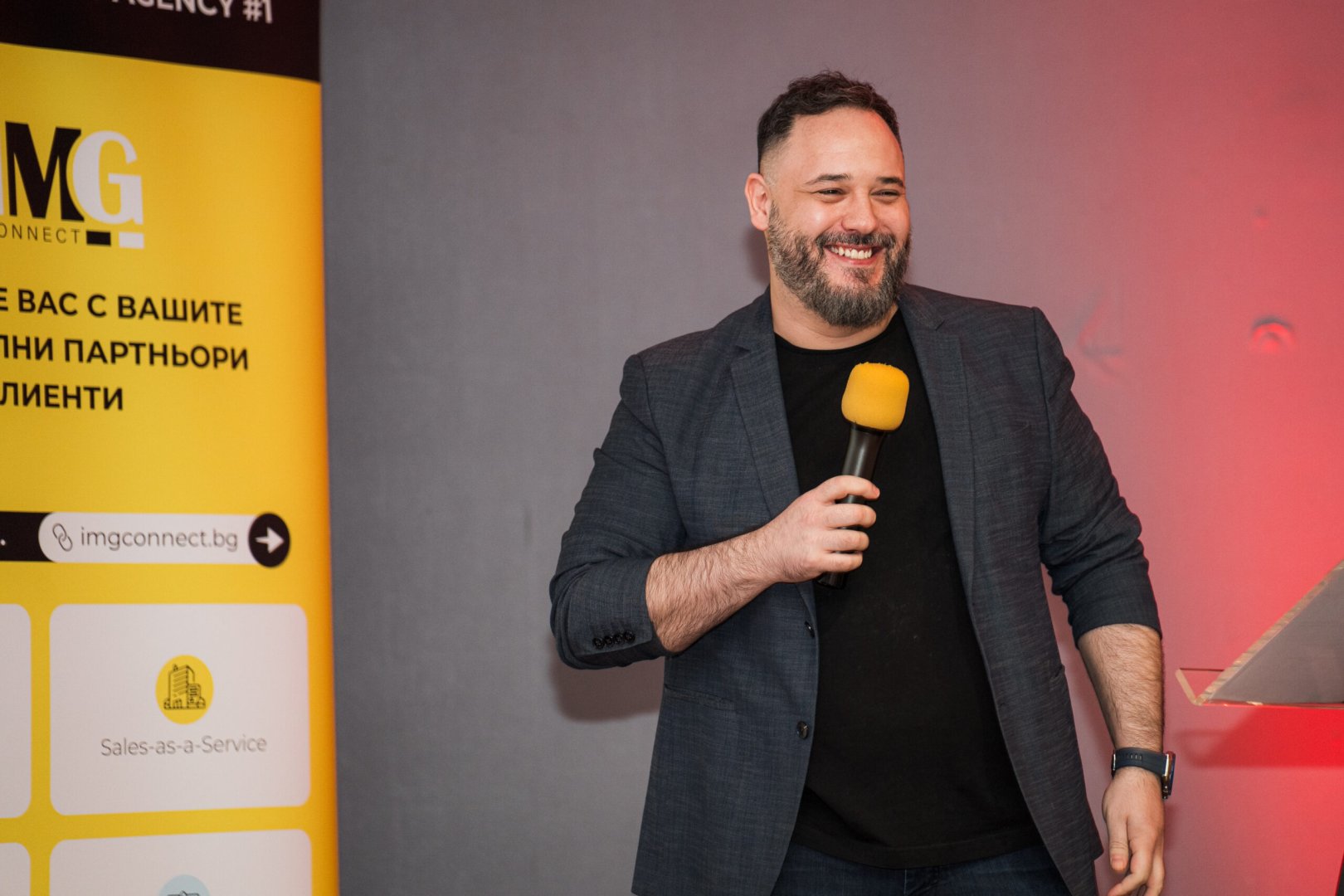
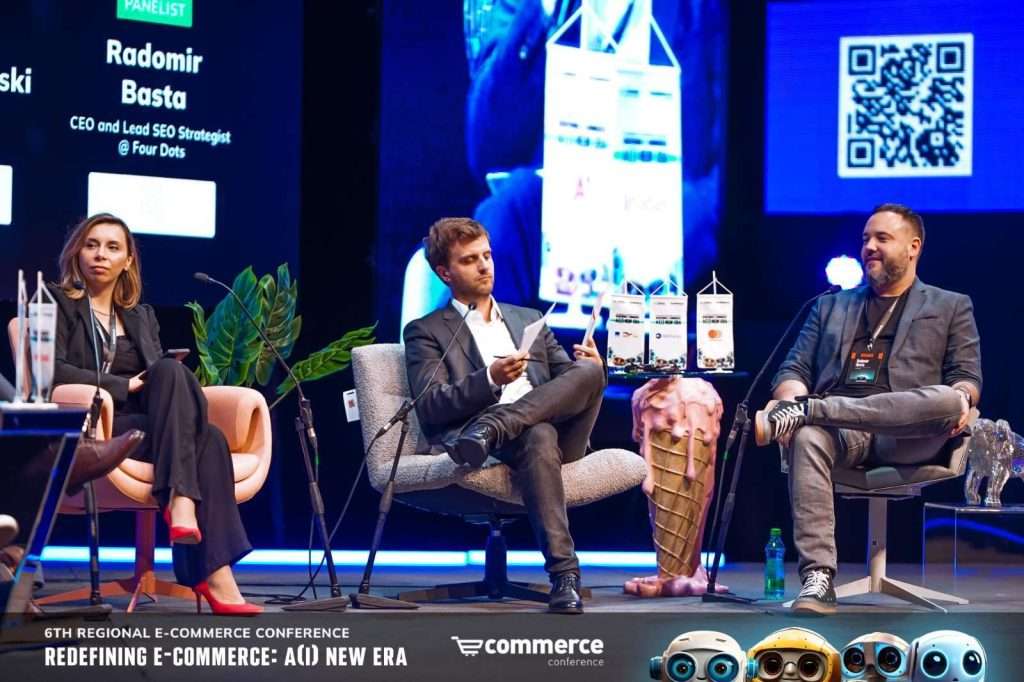
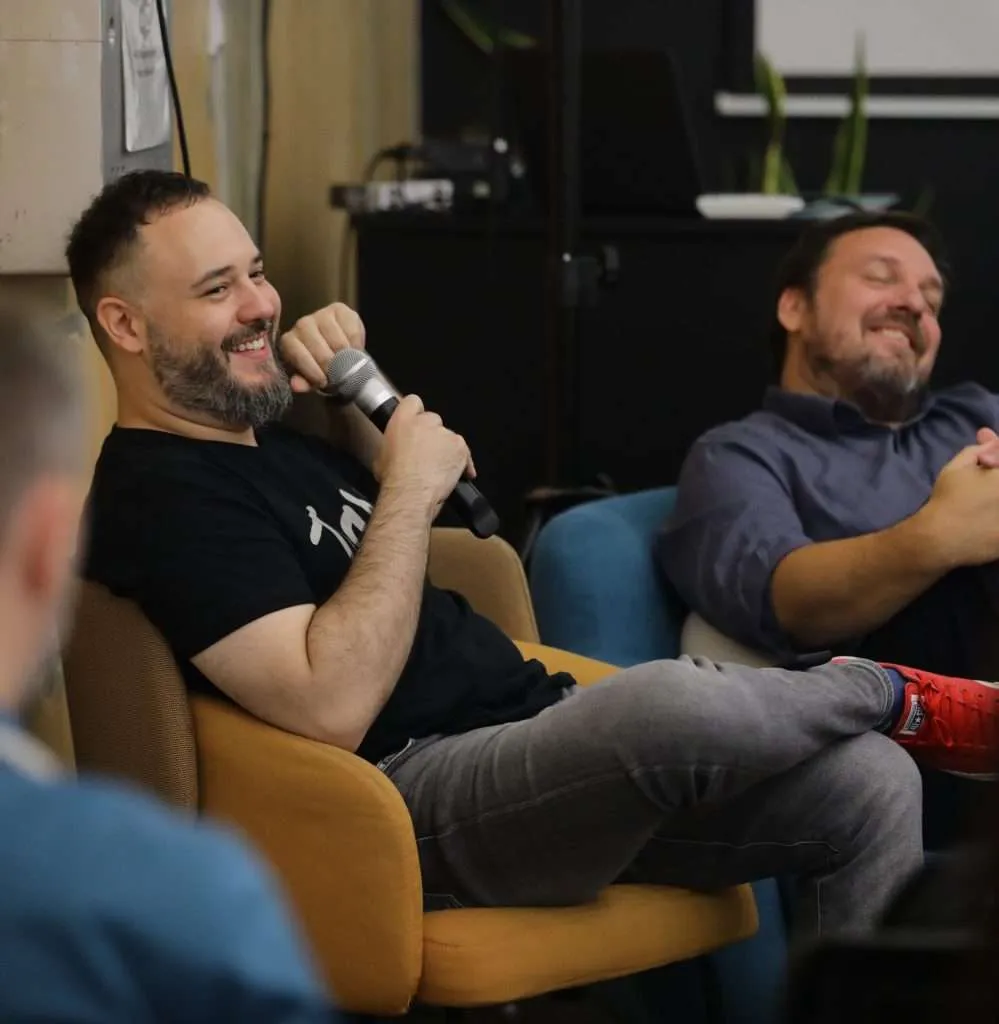
He lectures on SEO at Belgrade’s Digital Communications Institute, speaks at industry events, and writes about building products that actually ship.
Who Radomir is.
Radomir started in 2010 as a hands-on SEO consultant. In 2013, he co-founded Four Dots with three partners who still help run the agency today. Thirteen years later, Four Dots has worked with Coca-Cola, Philip Morris International, Orange Telecommunications, Beko, Air Serbia, and more than 200 mid-market brands across three continents.
In parallel with the agency work, he kept building products. Six before Suprmind. Base.me for link building management, now maintaining an 80% link survival rate for Four Dots versus the 60% industry average. Reportz.io for real-time client reporting, tracking over a billion marketing events annually across 30+ channels. Dibz.me for prospecting. TheTrustmaker for conversion social proof. UberPress.ai for automated content. FAII.ai for AI visibility monitoring across ChatGPT, Claude, Gemini, Grok, and Perplexity.
Each product started as an internal Four Dots problem nobody else was solving properly. Each one eventually became useful enough that other agencies and in-house teams started paying to use it.
Why Suprmind exists.
A few years ago, the Four Dots team started using AI models across every part of client work. ChatGPT for content drafts. Claude for analysis. Gemini for research. Perplexity for fact-checking. Grok for real-time data.
Within six months, a pattern became obvious. Every important question ended up in three or four browser tabs. Each model gave a confident answer. The answers often disagreed. There was no clean way to reconcile them.
For low-stakes work, this was fine. Write an email. Summarize a document. Ask one AI, move on.
Agency work was not always low-stakes. Pricing strategies that shaped a client’s entire quarterly revenue. Messaging for product launches that could not be undone. Targeting calls that would define a brand’s public reputation. Single-model confidence on questions like those was gambling with somebody else’s money.
Suprmind.ai came out of that frustration. Launched in 2025, it puts five frontier models in one orchestrated thread. Not side by side. In genuine structured conversation, where each model reads what the others said before responding.
A shared Context Fabric keeps all five synchronized across long sessions. A Knowledge Graph builds a passive project brain over time, retaining entities, decisions, and relationships that would otherwise vanish between sessions. The Scribe extracts action items and synthesized conclusions in real time. A Disagreement/Correction Index quantifies exactly how much the models agree or diverge on any given turn.
The principle behind the design: disagreement is the feature.
When the models agree, conviction has been earned. When they disagree, the uncertainty has been made visible before it becomes an expensive mistake.
Five frontier models.
One conversation.
Each model plays a specific role. Each one reads what the others said before responding.
GPT
Logical structure, technical analysis, step-by-step problem-solving.
Claude
Positioned as the “CEO” of the boardroom. Nuance, synthesis of competing positions, edge-case identification.
Gemini
Massive context window. Sprawling documents, datasets, and multi-modal inputs stay fully in frame.
Grok
Real-time social intelligence and sentiment via its native X data stream.
Perplexity
Live web research with automatic source citations on every factual claim.
Six modes shape how they collaborate.
Sequential for iterative critique where each model builds on the last. Super Mind for parallel synthesis. Debate, using formal argumentation styles like Oxford or Lincoln-Douglas, for structured stress-testing. Red Team for adversarial vulnerability discovery from six attack vectors. Research Symphony for comprehensive multi-stage investigation. Targeted, via @mentions, to route sub-tasks to specific models within the same thread.
A dedicated Decision Validation Engine sits on top, running a six-stage pipeline that returns a verdict: GO, NO_GO, or GO_WITH_CONDITIONS.
The agency that supported the lab.
Four Dots is the infrastructure that made Suprmind possible.
Co-founded in 2013 with three partners who still run it alongside Radomir today. Thirteen years later, the agency operates from New York, Belgrade, Novi Sad, Sydney, and Hong Kong. Thirty-plus specialists. More than 200 clients across three continents. Google Premier Partner status, the top three percent of agencies worldwide.
The client list reflects the positioning. Coca-Cola, Philip Morris International, Orange Telecommunications, Beko, and Air Serbia, alongside many mid-market brands. Work with enterprise accounts at that scale generates the cash flow, the problem surface, and the feedback loop a product lab needs. The agency grew on organic referrals, without outside capital, and operates strictly month to month.
That structural exposure – prove value or lose the client in thirty days – is the pressure that surfaces the problems Suprmind was built to solve. Suprmind was not built by a solo founder guessing at user needs. It was built by a working agency that encountered the problem daily, on accounts where the cost of being wrong was measured in six figures.
Fifteen years in, still reading crawl data.
Radomir started as a hands-on SEO consultant in 2010. He still reviews crawl data, audits link profiles, and weighs in on keyword decisions for enterprise Four Dots accounts.
That practitioner background shaped how Suprmind was designed. Debate mode exists because he has watched real agency strategies fall apart under first-contact pressure testing and wanted a way to catch those failures before clients did. The Decision Validation Engine exists because executives need verdicts, not essays. Research Symphony has a four-stage pipeline – retrieval, pattern analysis, critical validation, actionable synthesis – because real research is never one pass.
Suprmind was designed by someone who needed it to work on actual problems. Not a demo. Not a prototype. A tool the agency uses daily on client deliverables.
Teaching, writing, speaking.
None of this makes Suprmind work better. What it makes clear is the kind of builder behind it.
Lecturer
Principal SEO lecturer at Belgrade’s Digital Communications Institute since 2013.
Author
The Good Book of SEO, published in 2020. A practitioner manual, not a thinkpiece.
Forbes Agency Council
Member and contributor on client reporting quality, mobile-first advertising, and brand building.
BrandingMag
Author of longer-form work including The PRISM Model and An Agentic Framework for All.
Speaker
Regular speaker at regional and international digital marketing conferences.
The professionals who make consequential decisions
are not going to keep settling for one confident answer.
They are going to want validation. They are going to want to see where the models disagree. They are going to want the disagreements surfaced as a feature, not buried as noise.
Suprmind is the infrastructure for that kind of work.
Start Your Free Trial
See Pricing
7-day free trial. No credit card required.
Disagreement is the feature.
If your work involves recommendations that carry weight, the tool was built for you.