Most discussions blur categories. This leads to brittle prototypes and unpredictable behavior in production. If you cannot state which system you are building, you cannot reason about failure modes.
You need rigorous safety checks and validation methods. This guide clarifies canonical architectures and modern variants. You can Explore all features of modern orchestration tools to manage these deployments.
We provide a selection rubric tied to your specific constraints. We write this for practitioners who deploy systems in research and professional workflows. You will find concrete frameworks to evaluate your next project.
Core Concepts of Agent Architectures
Every system operates on a basic foundation. The perception-action loop drives all interactions. A system receives percepts from its environment and takes actions based on its policy.
The environment dictates the complexity of the task. We must define the state representation clearly before writing code.
- Fully observable environments: The system sees the complete state at all times.
- Partially observable environments: The system must infer missing information from context.
- Deterministic versus stochastic: Actions have guaranteed or probabilistic outcomes.
We measure success through a strict performance metric. Autonomy and rationality define how well the system maximizes this metric. Rational models select actions that yield the highest expected performance.
Reflex Agents and Reactive Systems
Reflex agents act only on current percepts. They ignore historical data and future projections completely. These systems rely on simple condition-action rules for fast execution.
They assume a fully observable environment. If the state changes rapidly, they fail completely.
- Strengths: Fast execution and low compute costs.
- Limits: Cannot handle partially observable states or hidden variables.
- Use cases: Basic e-commerce listing keyword matching and routing.
Failure occurs when the environment hides critical data. You must test these models against incomplete inputs to verify stability.
Model-Based and Deliberative Agents
Model-based agents maintain an internal state. They track the world using environment models to understand context. This allows them to handle partially observable environments effectively.
They update their state based on previous actions and new percepts. The decision policy relies entirely on this updated state.
- Strengths: Manages hidden information and tracks historical changes.
- Limits: Requires accurate modeling of the physical or digital world.
- Use cases: Legal research triage tracking reviewed documents over time.
Inaccurate models lead to compounding errors over time. You must validate the internal state tracking regularly to prevent drift.
Goal-Based Systems
Goal-based agents project into the future. They consider the outcomes of their actions before acting. This involves planning and search agents evaluating multiple potential paths.
They ask what happens if they take a specific action. This requires significant computational power for deep search trees.
- Strengths: Highly flexible in changing environments and novel situations.
- Limits: Search algorithms become computationally expensive very quickly.
- Use cases: Experimental planning models in scientific research.
They often struggle with real-time constraints during complex tasks. Limit their search depth to prevent system timeouts and crashes.
Utility-Based Architectures
Goals only provide a binary success or failure metric. Utility-based agents measure the quality of a specific state. They maximize expected utility across all possible outcomes.
They map states to real numbers representing success. This allows them to trade off conflicting goals effectively.
- Strengths: Handles uncertainty and conflicting objectives well.
- Limits: Defining the utility function is notoriously difficult.
- Use cases: Investment screeners balancing risk and reward profiles.
Poorly defined utility functions cause catastrophic failures in production. You must test edge cases extensively before deploying these systems.
Learning Systems and Reinforcement
Learning agents improve their performance over time. They use feedback to modify their decision policies automatically. This often involves reinforcement learning agents operating under uncertainty.
We formalize these environments using Markov decision processes. The model learns policy and value functions through trial and error.
- Strengths: Adapts to unknown environments without explicit programming.
- Limits: Requires massive amounts of training data to function.
- Use cases: Autonomous pricing systems in dynamic financial markets.
These models suffer from poor sample efficiency. They pose severe safety risks during the initial exploration phase.
BDI Architecture and Hierarchical Design

The BDI (Belief-Desire-Intention) architecture models human reasoning patterns. Beliefs represent the state of the world. Desires represent objectives. Intentions represent committed plans.
This structure helps separate planning from execution phases. It pairs well with hierarchical agents that break massive tasks into manageable subtasks.
- Strengths: Highly interpretable decision making for human operators.
- Limits: Complex to implement and maintain at scale.
- Use cases: Portfolio rebalancing planners with strict compliance rules.
BDI models require rigorous specification from developers. You must map every desire to a concrete, testable intention.
Watch this video about types of artificial intelligence agents:
LLM Tool-Augmented Systems
Modern architectures use Large Language Models as reasoning engines. These systems use external tools to interact with the world. They retrieve data, execute code, and call external APIs.
They combine natural language understanding with concrete actions. This creates highly capable but unpredictable systems in production. You can read modern survey papers on LLM agents for deeper technical breakdowns.
- Strengths: Massive general knowledge and broad reasoning capabilities.
- Limits: Prone to hallucinations and inconsistent data formatting.
- Use cases: Research literature models synthesizing complex academic papers.
You must ground these models with strong retrieval systems like Context Fabric and a Knowledge Graph. Prompt engineering alone cannot fix fundamental reasoning errors.
Multi-Agent Systems and Orchestration
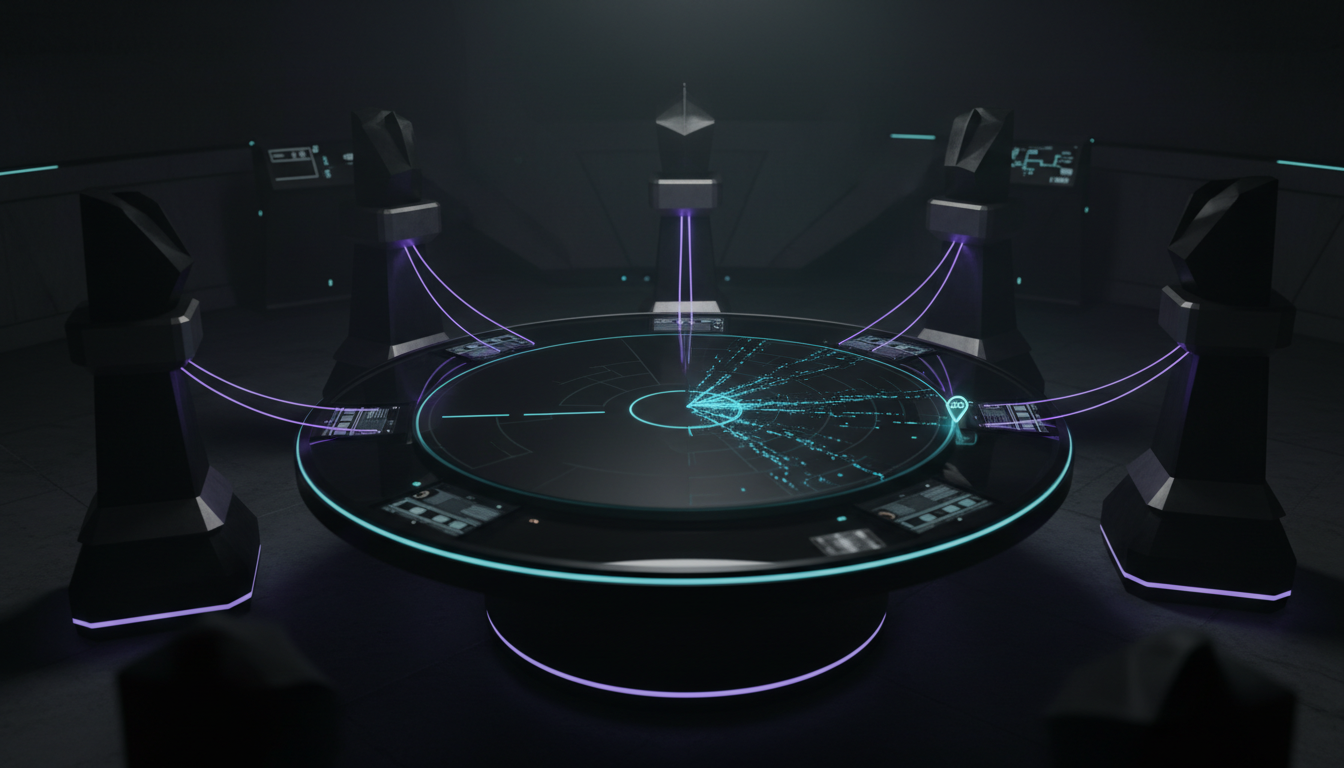
Single models often hit hard performance ceilings. Multi-agent systems distribute tasks across specialized models. They introduce coordination, negotiation, and distinct roles for each component.
This approach reduces individual model hallucinations significantly. You can implement Multi-AI orchestration for high-stakes knowledge work using these patterns.
- Strengths: Diverse perspectives and built-in error checking mechanisms.
- Limits: High latency and complex communication protocols between components.
- Use cases: Final legal opinion checks requiring multiple expert viewpoints.
You can use an AI Boardroom for structured multi-LLM debate. This surfaces edge cases before executing critical actions.
System Selection Framework
Choosing the right architecture dictates your project success. You must evaluate your constraints before writing any code. We use a strict selection rubric for every project.
Consider these core constraints for your system design. You can reference canonical AI texts to understand the underlying math.
- Observability: Can the model see the entire environment?
- Data availability: Do you have historical data for learning?
- Risk tolerance: What happens if the system makes a mistake?
- Latency requirements: How fast must the system respond?
- Compute budget: Can you afford deep search algorithms?
Simple reflex models work for low-risk, high-speed tasks. Complex multi-agent setups fit high-stakes, low-speed requirements perfectly.
Validation and Deployment Operations
You must validate every architecture before production deployment. Untested models destroy data and execute dangerous API calls. We require strict Decision validation in high-stakes environments.
Follow this validation checklist for every new architecture.
- Adversarial tests: Feed the system intentionally confusing prompts.
- Offline evaluation: Run the model against historical datasets.
- Simulation: Test the system in a closed sandbox environment.
- Telemetry tracking: Log every percept, state change, and action.
- Rollback procedures: Build automated kill switches for rogue behavior.
Never deploy an autonomous system without human-in-the-loop approval gates. You must maintain complete oversight of the execution pipeline.
Frequently Asked Questions
Which types of artificial intelligence agents work best for research?
Tool-augmented LLM models and multi-agent systems perform best for research. They can retrieve literature, synthesize findings, and debate conflicting information effectively.
How do you choose between reactive and deliberative architectures?
Reactive systems fit environments where speed matters more than deep reasoning. Deliberative models fit complex scenarios requiring future planning and state tracking.
What makes multi-agent setups safer than single models?
Multiple models can cross-check each other before executing actions. One model drafts a plan while another acts as a red team to find flaws.
Securing Your Next Deployment
You must choose your architecture based on environment assumptions and oversight needs. Quantify your trade-offs across reliability, cost, and speed.
Always validate your systems with adversarial tests and staged rollouts. A clear taxonomy helps you justify your architecture choices and reduce deployment risk.
Review the orchestration options to build safer, more reliable systems. Structured workflows protect your data and improve output quality.


