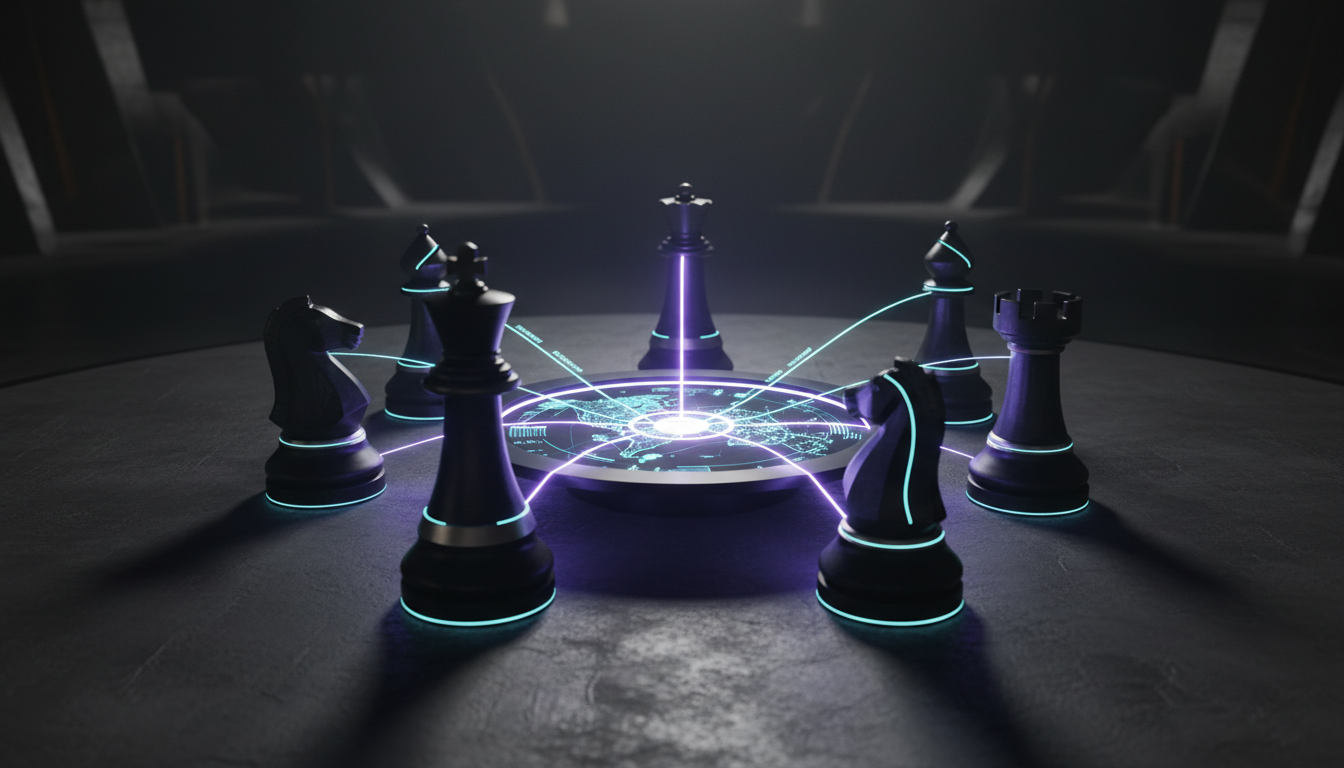
You ask three different AIs for the exact same answer. You get three completely different stories. Which one do you actually trust?
Relying on a single model hides massive blind spots. You miss critical sources and accept optimistic assumptions. You overlook shallow counterarguments. In high-stakes knowledge work, that creates measurable risk.
Multichat AI coordinates several models within one structured conversation. These models debate, stress-test, and synthesize information. This raises your confidence without adding hours of manual cross-checking. See how a multi-model session runs to understand this process.
This guide distills proven multi-AI orchestration patterns. Analysts, lawyers, and researchers use these workflows to validate decisions. They rely on reproducible steps and transparent audit trails.
Understanding the Core Architecture
A basic group chat simply puts bots in a room. A true multi-model chat relies on specific engineering primitives. These components prevent chaos and enforce rigorous analysis.
Essential Platform Components
Professional orchestration requires more than basic API calls. You need systems that manage memory and ground responses.
- Context Fabric: Maintains persistent context sharing across models simultaneously.
- Vector Database Grounding: Anchors all AI responses to your specific uploaded documents.
- Knowledge Graph: Retains structured information across iterative sessions.
- Conversation Control: Pauses, interrupts, and queues messages during deep thinking phases.
Publications like MIT Technology Review note that single models often hallucinate facts when lacking proper grounding. Orchestrated multi-agent conversation forces models to check each other. You trade blind faith for structured evidence.
Six Orchestration Modes for Decision Validation
Different problems require different validation patterns. You must select the right mode based on your uncertainty and risk levels.
Linear and Simultaneous Processing
Basic workflows require structured progression or immediate comparison. These modes handle straightforward analytical tasks.
- Sequential Mode: One model drafts content while the next refines it.
- Parallel Analysis AI: Multiple models process the same prompt simultaneously.
- Side-by-Side Comparison: You can easily compare GPT, Claude, and Gemini outputs instantly.
Confrontational Validation Workflows
High-stakes environments demand aggressive stress-testing. A 5-Model AI Boardroom setup works perfectly for these confrontational modes. Decision validation for high-stakes work requires these exact patterns.
- AI Debate Mode: Assigns opposing viewpoints to different models. One argues the bull case while another builds the bear case.
- AI Red Team: Forces a specialized model to attack a drafted proposal. It hunts for logical flaws and missing citations.
Deep Investigation Patterns
Complex investigations require sustained collaborative LLM workflows. These modes handle massive document sets over long periods.
- Research Symphony: Stages coordinated multi-AI research tasks across your internal archives.
- Socratic AI Dialogue: Prompts models to ask continuous clarifying questions. This refines the core hypothesis before generating final answers.
Domain-Specific Execution Playbooks
Generic prompts fail in specialized fields. Professionals need rigid structures to get reliable results from multiple models.
Legal Brief Review
Lawyers cannot afford missing precedents or overlooked liabilities. Multi-model workflows catch issues a single pass might miss.
- Upload the draft brief and opposing arguments into the vector database.
- Assign Claude to act as the primary reviewing judge.
- Task GPT-4 with finding logical inconsistencies in the citations.
- Force the models to synthesize a final risk report.
Equity Research Validation
Financial analysts use these systems to break down earnings reports. They need to strip away corporate optimism.
- Feed the latest SEC filings to three different models.
- Set up an aggressive debate regarding the revenue projections.
- Require exact page number citations for every single claim.
- Extract a unified summary of the highest risk factors.
Avoiding Common Multi-Model Failures

Running several models at once introduces new types of errors. You must watch for these specific failure modes during your sessions.
Watch this video about multichat ai:
The Consensus Illusion
Recent arXiv research papers demonstrate that models often agree simply because they share similar training data. This creates a false sense of security. You must force models into opposing personas to break this compliance loop.
Prompt Leakage and Context Drift
Long sessions often cause models to forget their original instructions. They start blending their assigned roles. Anthropic’s research on model behavior highlights the need for strict prompt boundaries. Strict conversation control prevents drift by injecting role reminders before every turn.
Executing a Reproducible Runbook
Setting up an orchestrated session requires strict governance. You need a clear process to evaluate outputs and manage prompt optimization for teams.
Step-by-Step Setup Guide
Follow these exact steps to build your first validation workflow.
- Define your exact risk parameters and required disagreement level.
- Upload source files into the system for strict grounding.
- Select your models based on provider strengths and known limitations.
- Assign clear roles using targeted prompt packs.
- Run the session and monitor the context sharing across models.
Evaluating the Final Outputs
Never accept the final synthesis without checking the underlying work. Treat model disagreement as a valuable signal rather than an error.
- Disagreement Analysis: Map exactly where models diverge on specific claims.
- Source Coverage: Verify that all models cited the required documents.
- Reproducibility: Run the exact same prompt sequence again to check consistency.
Moving from Speculation to Structured Evidence
Single-model workflows leave too much room for unverified errors. Coordinated multi-model analysis forces transparency into your daily research.
- Select modes based on your needed disagreement and risk.
- Ground all models in your secure document repositories.
- Treat conflicting AI answers as areas requiring human review.
- Apply domain-specific templates to speed up execution.
You now have the blueprints to run rigorous validation sessions. You can stop guessing and start proving your conclusions. Try a multichat session in the playground to practice this workflow with a low-risk prompt.
Frequently Asked Questions
What makes multichat AI different from standard tools?
Standard tools rely on one model to generate an answer. A multichat platform forces multiple models to interact and validate each other. This creates a transparent audit trail for complex decisions.
When should I use the red team workflow?
Use this workflow when reviewing critical documents like legal briefs. The aggressive model specifically looks for risks and logical gaps in the primary draft.
How do models maintain shared context?
Orchestration platforms use a dedicated memory layer. This system guarantees all participating models see the exact same documents and instructions simultaneously.
Does this workflow prevent hallucinations entirely?
No system eliminates errors completely. The multi-model approach catches most hallucinations because independent models rarely invent the exact same false information.


