


Multi-AI Orchestration Platform
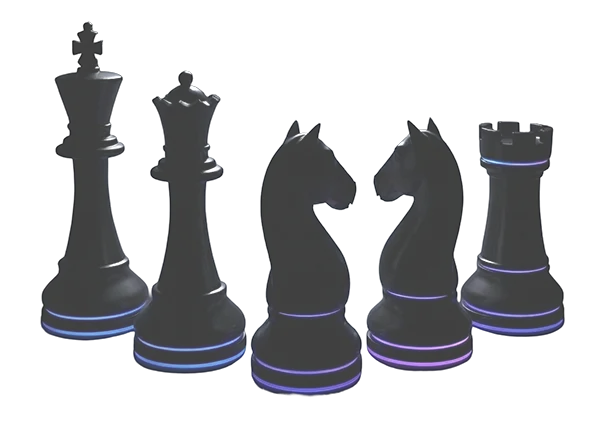
Suprmind coordinates five frontier AI models—GPT-5.2, Claude Opus 4.5, Gemini 3 Pro, Perplexity Sonar Reasoning Pro, and Grok 4.1—in a single shared conversation. Each AI sees what came before and builds on it. By the fifth response, you have perspectives that compound rather than five versions of the same answer.
Think of it like a medical consilium. When doctors face a complex case, they don’t ask one specialist—they convene a panel. Each expert brings different training, different pattern recognition, different blind spots. The diagnosis that survives multiple expert perspectives is more reliable than any single opinion. Suprmind brings this approach to Multi-AI conversations.
See How Five Frontier AI Models Collaborate in One Shared Conversation
What is multi-AI orchestration?
Most people use AI by chatting with one model at a time. Suprmind treats that as a single-perspective trap: the model might be strong overall, yet it can still hallucinate, miss key assumptions, or fail to notice contradictions.
Multi-AI orchestration means multiple frontier models participate in your conversation, the system controls how they participate (order, roles, synthesis), and each model sees the full conversation context before responding.
In Sequential mode, Claude doesn’t just see your question—it sees your question plus what GPT already said. Gemini sees your question plus GPT’s response plus Claude’s addition. This is compounding intelligence: each response builds on everything before it.
Suprmind handles the orchestration, memory, and synthesis. You focus on what the disagreements reveal.
Five frontier AIs.
Different strengths. Shared context.
Each model brings unique capabilities. Suprmind routes questions to leverage these differences rather than treating models as interchangeable.
GPT-5.2
OpenAI
Logical reasoning and technical precision. Strong at structured analysis and systematic problem-solving.
Claude Opus 4.5
Anthropic
Nuanced analysis and critical thinking. Careful consideration of edge cases, ethical implications, and hidden assumptions.
Gemini 3 Pro
1M+ token context window. Long-context synthesis, multimodal capabilities, and Google-indexed knowledge.
Perplexity Sonar
Reasoning Pro
Real-time web research with citations. Grounds conversations in current, verifiable information.
Grok 4.1
xAI
Fast reasoning with live web and X/Twitter access. Direct communication, willing to challenge assumptions.
Control: Use @mentions to target specific models. Without @mentions, Suprmind runs the configured orchestration for your selected mode.
Disagreement is the feature.
Most AI tools optimize for smooth, confident answers. Suprmind takes the opposite approach.
When you ask a single AI a question, you get its best guess. You have no way to know if that answer would survive scrutiny from a different model with different training data and different reasoning patterns.
Suprmind surfaces disagreement intentionally. When Claude says X and Grok says Y, that’s not a bug—it’s information. Weak ideas get exposed when they can’t withstand multiple perspectives. Strong ideas get stronger when they survive five models building on each other.
When five models converge, confidence goes up.
When they disagree, you’ve located the assumptions, tradeoffs, or missing facts that need attention.
That’s the point.
Different problems.
Different orchestrations.
Choose how the five AIs work together based on what you’re trying to accomplish.
Sequential
A → B → C → D → E
AIs respond in order, each building on all previous responses. The “compounding intelligence” workflow. Best for complex analysis, research synthesis, technical architecture.
Fusion
(A + B + C + D + E) → Synthesis
All five respond simultaneously, then merged into one unified answer that captures consensus and highlights conflicts. Best for quick multi-perspective overviews.
Debate
Pro ↔ Con → Judgment
Formal positions, rebuttals, and final stances to surface the strongest arguments on each side. Best for validating decisions and stress-testing strategies.
Red Team
Target ← Attack Vectors
Adversarial critique from multiple angles: technical feasibility, market viability, implementation risks, ethical concerns. Best for finding weaknesses before stakeholders do.
Research Symphony
Plan → Search → Analyze → Write
Multi-stage pipeline with specialized roles across phases for cross-validated research with sources. Best for literature reviews, due diligence, comprehensive analysis.
Targeted
User → @SpecificModel
Use @mentions to route questions to specific models only. Best for precision tasks: @perplexity for citations, @claude for nuanced reasoning, @grok for direct challenge.
How continuity and memory work
A common failure mode in AI work is context loss. Suprmind solves this with shared context and project organization.
Context Fabric
A unified memory layer that maintains shared context across all five AI models. When you upload a document, discuss a topic, or establish requirements, that information persists across model boundaries. Supports up to 1M+ tokens of shared context.
Knowledge Graph
Extracts entities, decisions, and relationships from conversations and stores them for search and reuse within projects. Query relationships rather than scrolling through history.
Projects & Memory
Workspaces that bundle conversations, custom instructions, uploaded files, and Knowledge Graph around a single workstream. Projects are isolated by default so unrelated work doesn’t bleed together. Master Project connects multiple projects for cross-workspace intelligence.
Scribe Panel
Live synthesis as you talk—key decisions, constraints, action items, and insights captured without interrupting the flow. Turns conversations into structured, searchable knowledge.
Master Documents
Turn multi-AI conversations into polished deliverables with one click.
23+ built-in document types across categories: analysis/research, content/marketing, business strategy, technical documentation, and communication/reference.
Choose which model generates the document depending on desired style—Claude for nuanced prose, GPT for technical rigor, Perplexity for citation-heavy outputs.
No more copy-paste from chat windows. One-click generation from your thread, formatted and ready to share.
Prompt Adjutant & Quick Tools
Prompt Adjutant
Pre-send prompt review that suggests clarifications and structure for better multi-AI responses. Catch ambiguity before it compounds across five models.
Quick Tools
One-click transformations: summarize, expand, rewrite, translate, simplify, extract key points. These don’t consume conversation messages—utility without overhead.
Built for decisions that
can’t afford single-model thinking.
Professional Synthesizers
North Star User
People who create substantial deliverables by orchestrating AI conversations. Research reports, strategic analyses, technical documentation—work where thoroughness matters more than typing speed.
Before Suprmind: Running the same question through ChatGPT, Claude, and Gemini manually, then copying responses into a document and trying to synthesize them. Context lost between tools. Hours spent on mechanics.
Strategic Leaders
Executives who need multiple perspectives on critical decisions but don’t have time to manually consult five AI tools. Board presentations stress-tested before the meeting. Competitive analysis where different models surface different threats.
Before Suprmind: Presenting recommendations based on one AI’s output, then getting blindsided by questions the AI didn’t anticipate.
Research Teams
Analysts who need comprehensive coverage with diverse viewpoints. Literature reviews that cross-validate sources. Hypothesis testing where AIs argue different interpretations of the same data.
Before Suprmind: Knowing one AI might have training gaps but not knowing where those gaps are.
Consultants
Professionals who must deliver analysis that survives client scrutiny. Recommendations built on multi-perspective analysis. Blind spots eliminated before the client meeting.
Before Suprmind: Delivering work product based on a single AI perspective, then scrambling when the client asks “but did you consider X?”
Traditional AI Chat vs. Suprmind
| Traditional AI Chat | Suprmind Orchestration |
|---|---|
| One AI, one perspective | Five AIs, orchestrated collaboration |
| You hope you picked the right model | The right model(s) for every question |
| Manual comparison across browser tabs | Automatic synthesis and comparison |
| No way to validate AI answers | Built-in debate and red-teaming |
| Context lost when you switch tools | Unified memory across all AIs |
| Each chat starts fresh | Persistent knowledge that compounds |
Privacy, Security, and Outages
Data privacy: Project and user isolation. Your data is not used to train models. Enterprise adds SSO, audit logs, and retention controls.
Security: Encryption in transit and at rest. Workspace isolation. Enterprise security reviews available.
Provider outages: If one AI is unavailable, remaining AIs continue. Errors are reported transparently—no silent substitution.
Pricing Overview
Spark
$4/mo
Pro
$45/mo
Frontier
$95/mo
Enterprise
Custom
Frequently Asked Questions
What models does Suprmind use?
GPT-5.2 (OpenAI), Claude Opus 4.5 (Anthropic), Gemini 3 Pro (Google), Perplexity Sonar Reasoning Pro, and Grok 4.1 (xAI). All frontier models, running in orchestrated collaboration rather than isolation. This roster updates as frontier models evolve.
Why not just use ChatGPT or Claude directly?
You can. But you get one model’s perspective, and you have no way to know what that model missed. Suprmind gives you multiple perspectives in one conversation, with shared context across all of them.
How is this different from using 5 browser tabs?
Shared state. In browser tabs, Claude doesn’t know what ChatGPT said. In Suprmind, Claude analyzes ChatGPT’s output before responding. Three key differences: (1) Each AI sees what the others said and can build on or challenge it, (2) Context is shared so you don’t repeat background info, (3) Synthesis happens automatically in Fusion mode.
Does it hallucinate?
Individual models can hallucinate. The Orchestration Layer mitigates this by using other models to cross-reference claims. If Perplexity cites a source that doesn’t exist, Gemini (with Google Search grounding) is likely to flag the inconsistency in the next turn.
Is this just for research?
No. Any decision that benefits from multiple perspectives: business strategy, technical architecture, content creation, medical analysis, legal review, investment decisions. If it matters enough to get right, it matters enough to validate with multiple AI models.
How does the context window work across providers?
The Context Fabric normalizes tokenization across providers. While Gemini supports 1M+ tokens and others support less, Suprmind manages a rolling window of “critical context” to ensure the most relevant information is preserved for every model in the chain.
How does “Disagreement IS the Feature” work in practice?
When models disagree, Suprmind surfaces the disagreement rather than hiding it. You see that Claude recommends approach A while Grok recommends approach B, with their reasoning visible. You make the final decision with full awareness of the tradeoffs.
Glossary
Multi-AI orchestration
Coordinating multiple frontier models to collaborate within a single workflow.
Compounded intelligence
Ideas improve across the chain as later models build on prior perspectives.
@mentions
Explicit routing to one or more models (e.g., @claude, @perplexity).
Context Fabric
Unified memory layer that maintains shared context across all five AI models.
Project
Workspace containing context, files, instructions, and conversation history.
Knowledge Graph
Extracted entities, decisions, and relationships stored for search and reuse.
Master Document
Generated deliverable from a conversation, one-click output in 23+ formats.
Scribe Panel
Live synthesis of decisions, constraints, and insights as you talk.
Ready to see five AIs collaborate on your problem?
Plans start at $4/month. Watch disagreement become your competitive advantage.